Blog Post by Yari
March 30th, 2026
Airports Are Not Destinations Anymore. They’re Poorly Optimized Systems.
There’s a specific kind of frustration that comes from standing in a line that shouldn’t exist. An instance that isn’t due to demand exceeding capacity, or operational failure, but the system itself was never optimized for flow.
Hi if your new here, my name is Yari and I dislike long lines at a structural level, it stems from my dislike of wasted time. There’s no need to that pretend to be efficient while leaking inefficiency at every node which is something airports today are exceptionally well at. During my MBA I got to research and develop a ton of both sustainable aviation fuel and airlines/airports, I consulted for a major fuel company in Denmark.
Airports have tons of flaws; a major one is that Airports create the illusion of modernity.
I’m from NYC, which means there are three main airports are JFK, La Guardia and Newark. These also happen to not get the best ratings in terms of well… everything. As of 2026, La Guardia was historically among the most delay prone airports, Newark ranked number #1 for the most stressful in the US, while JFK ranked among the top five. That’s not a great newcomer entry point into a city that everyone wants to visit or the common traveler.
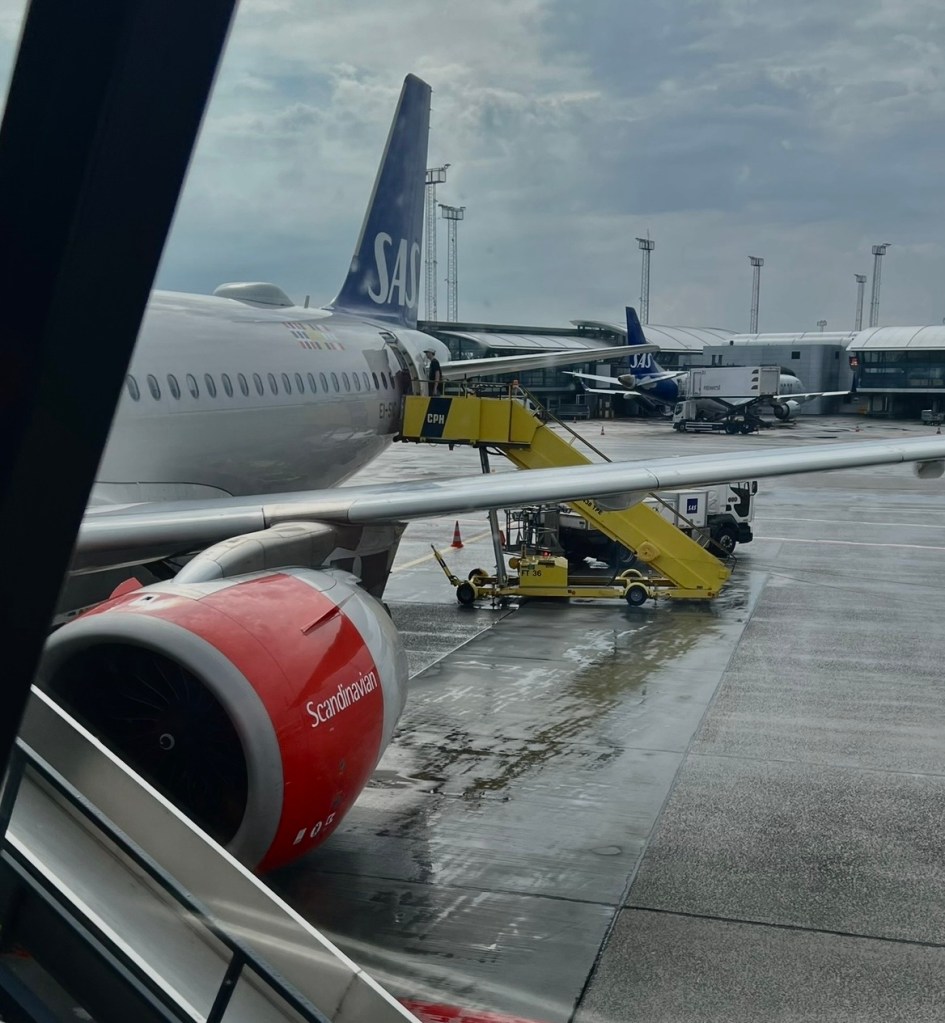
Modern airport architecture are beautiful using environmental psychology they are built to make you want to look outside, to travel and ironically to reduce stress using high glass walls, high ceilings, clean lines, and neutral palettes. It looks like someone took a design thinking workshop and optimized for perception of innovation.
But here’s the issue: It doesn’t feel like a destination; it’s an area most stressful because it feels like a transition layer and not even a meaningful one. Instead, it feels like a bus terminal similar to higher CapEx. There was a time when both airports and hotels had identity. Hotels especially. You checked in and it felt like arrival. Now? Some hotels feel like extensions of airports, and airports feel like extensions of nowhere. Everything is frictionless in design but not in experience. As of 2026, 42% of travelers experience stress, with key stress indicators including security lines, crowded terminal navigation, complex connections, and delays & cancellations. We as a society, optimized for the aesthetics of an airport so much that we forgot to optimize for movement, the system we’re actually in.
Let’s remove the branding for a second. An airport is not just architecture. It’s a multi node queueing network with stochastic demand and variable service rates. In simple terms, it has lines literality everywhere:
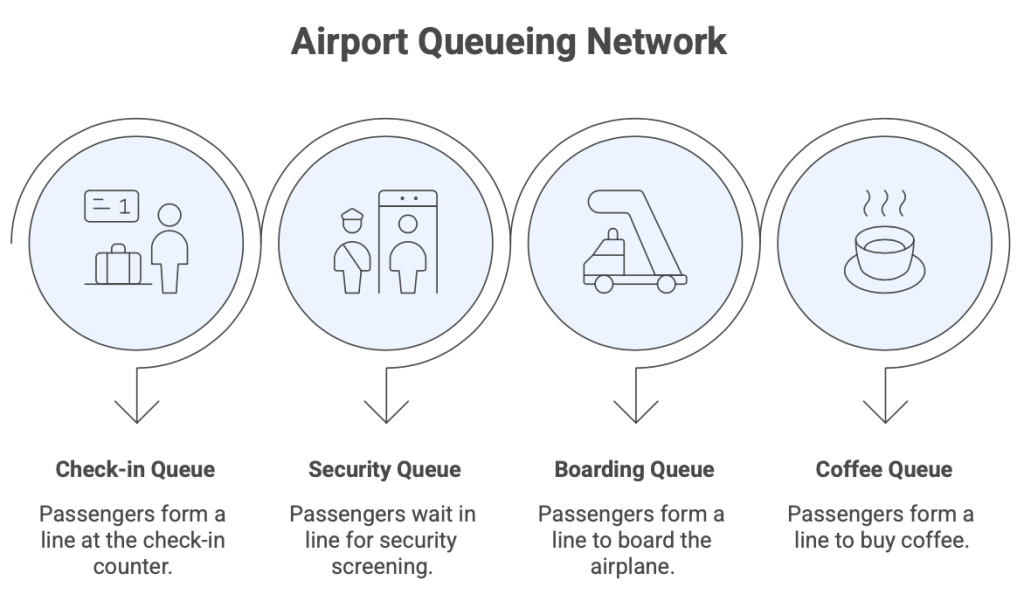
- Check in → queue
- Security → queue
- Boarding → queue
- Coffee → yet another queue pretending to be optional despite an online app included.
Each node/entry/exit point operates with:
- fluctuating arrival rates
- inconsistent processing times
- zero coordination across other nodes
From an operations perspective, this is a classic unbalanced system with local optimization but no global objective function. Which is why you can have:
- empty gates
- overloaded security
- and passengers acting like human Monte Carlo simulations trying to find the fastest path by themselves while balancing a coffee without spilling it. My personal favorite are the TikTok dancers on the walking belt. Super cute and trendy and yet another bottleneck into the system.
The Behavioral Inefficiency
The real failure isn’t just operational, it’s behavioral (psychology is sneakily everywhere, this is something you’ll learn in your MBA). Passengers are often forced to:
- estimate wait times
- choose between lines
- update decisions in real time
The system offloads optimization onto the user. Which is vastly inefficient, since users don’t have live info on:
- full information
- system wide visibility
- or predictive capability
So, what does a traveler do they do?
Well, they: optimize locally, switch lines, chase shorter queues, react to noise instead of signal, sometimes literally. Just like that you have a feedback loop where:
- an individual optimization worsens system efficiency
That’s not a user problem, it a bottleneck, you have a model problem, a disturbance in the force that has to be corrected. But we are MBA’s, we don’t wait someone else to solve, we meet the market and solve it ourselves (and as quickly as possible too, because we’re also super fast mostly because we hate wasting time).
The Fix: Build the Model the System Never Had
As MBA’s, we ride to dawn, aka, we fix the bottleneck by building an Airport Line Optimizer. We won’t build a simple dashboard that lacks interaction or yet another KPI vanity metric.
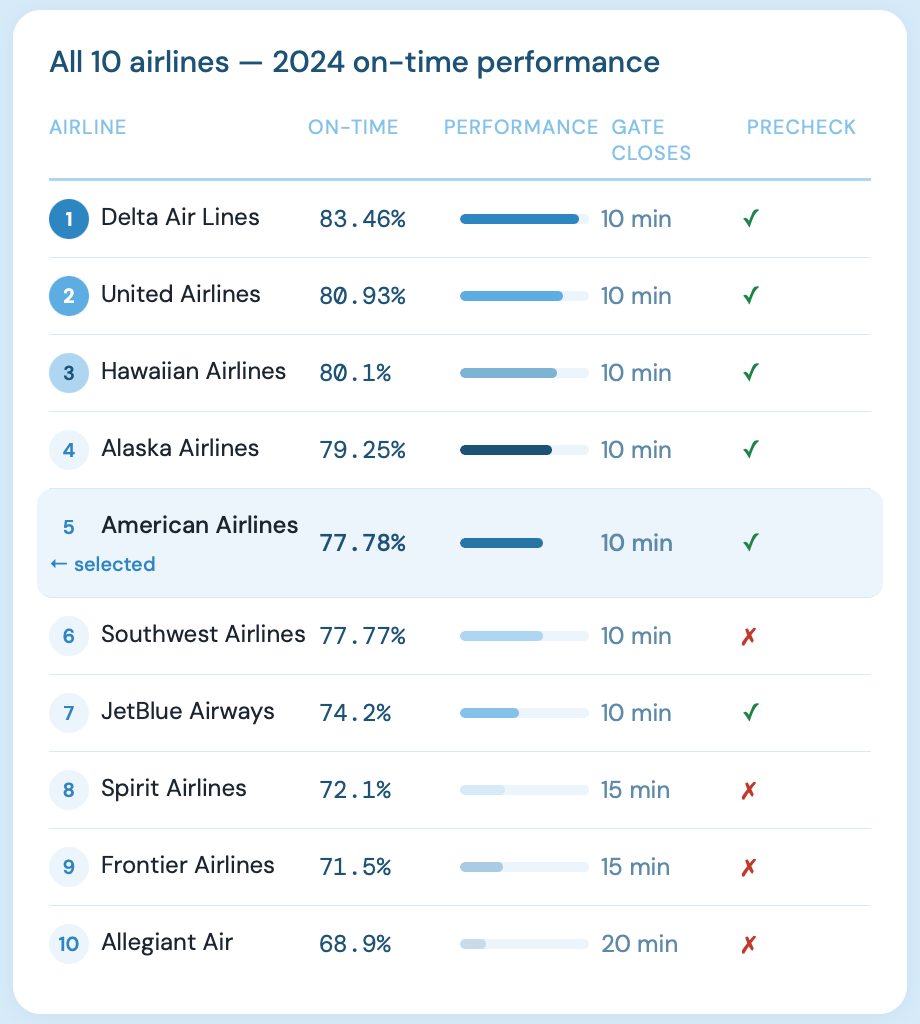
Instead, we’ll build a real decision engine, we’ll treat it like to become a time dependent system with sequential dependencies using the top 10 US airlines, including my personal favorite Delta. The solution is that it becomes obvious to the user (good use of User UI & UX) and easy to work with, so it doesn’t estimate but instead predicts.
Here’s how we break down the code through using a Real System Design
This is where the code comes in, not as an add on, but as the core operating logic, we’ll take historical data from TSA 2024 on 10 of the US top airlines.
Here’s the link to the python code
Input Layer: Define the System Variables
Start by structuring the environment:
- Arrival rate (λ): passengers entering each node per minute
- Service rate (μ): how fast each checkpoint processes
- Queue length (L): real time congestion
- Variance factors: traveler type, time of day, staffing
From an MBA lens, this is: defining the constraints and operational drivers of the system
From a tech lens: this is your feature engineering layer
Data Normalization & Scaling
Because not all variables operate on the same scale:
- arrival rates vs wait times vs queue lengths
We normalize for model stability.
In quant terms: we’re reduce noise and ensure comparability across dimensions
Time Series Construction
This is not a static dataset: we structure the data into sequences:
- t₁, t₂, t₃…
Because queues have memory. What happened 5 minutes ago impacts what happens now. This is where most systems fail: They treat queues as snapshots instead of evolving states.
Model Layer: Sequence Learning (LSTM)
We apply a sequence model, because:
- congestion propagates
- delays compound
- behavior is autocorrelated
The LSTM doesn’t just learn from the current state, it learns from the state transitions over time
Which means, we’re no longer asking “how long is the line?” We’re asking: “What will this system look like in 10 to 15 minutes?” That’s predictive optimization.
Prediction Output: Flow Forecasting
The model outputs:
- expected wait time distribution
- congestion probability
- throughput projections
Not a single number, instead it’s a range with confidence because averages can sometimes lie and variance matters.
Decision Layer: Optimization Engine
Now apply logic:
- Assign passengers to optimal queues
- Recommend rerouting
- Balance load across nodes
This becomes; real time system optimization under constraints
In MBA terms:
- maximizing throughput
- minimizing wait time variance
- improving system efficiency
In product terms:
- this is your decision intelligence layer
The Business Case
This is not just a “nice to have.” This is margin.
- Reduced wait times → increased passenger throughput
- Increased dwell time → higher retail conversion
- Lower stress → better customer experience
Airports are not just infrastructure. They’re multi sided platforms optimizing for flow and spend, and right now, they’re underperforming on both metrics.
The Core Mistake most Airports face:
They are designed airports like static environments. But they’re not, they are:
- dynamic
- probabilistic
- behavior driven systems
And you cannot optimize a dynamic system with static assumptions. That’s like building a portfolio model assuming zero volatility. It looks clean, until it fails and mostly does. Airports don’t have a line problem. They have a systems design and modeling failure. We optimized for how it looks, and often neglected how it behaved, as a result:
- passengers wait
- systems underperform
- and inefficiency compounds
But once you introduce:
- data
- sequence modeling
- real time optimization
The system changes, not just visually, but structurally, because modern isn’t glass walls and open ceilings. Modern structurally is; predictive, adaptive, and optimized for flow. And if your system still makes people stand in long, uncertain lines, it’s not modern just expensive inefficiency and a high chance of potential lawsuit if an injury occurs during that wait time.
 The Yariverse